Paint Correction cost · reviewed July 2026
Paint Correction Cost (2026): Prices by Stage and Car
Paint correction costs about $300–$1,500 in 2026 depending on stages and vehicle. Price a one-step, two-stage, or show correction and see if DIY is realistic.
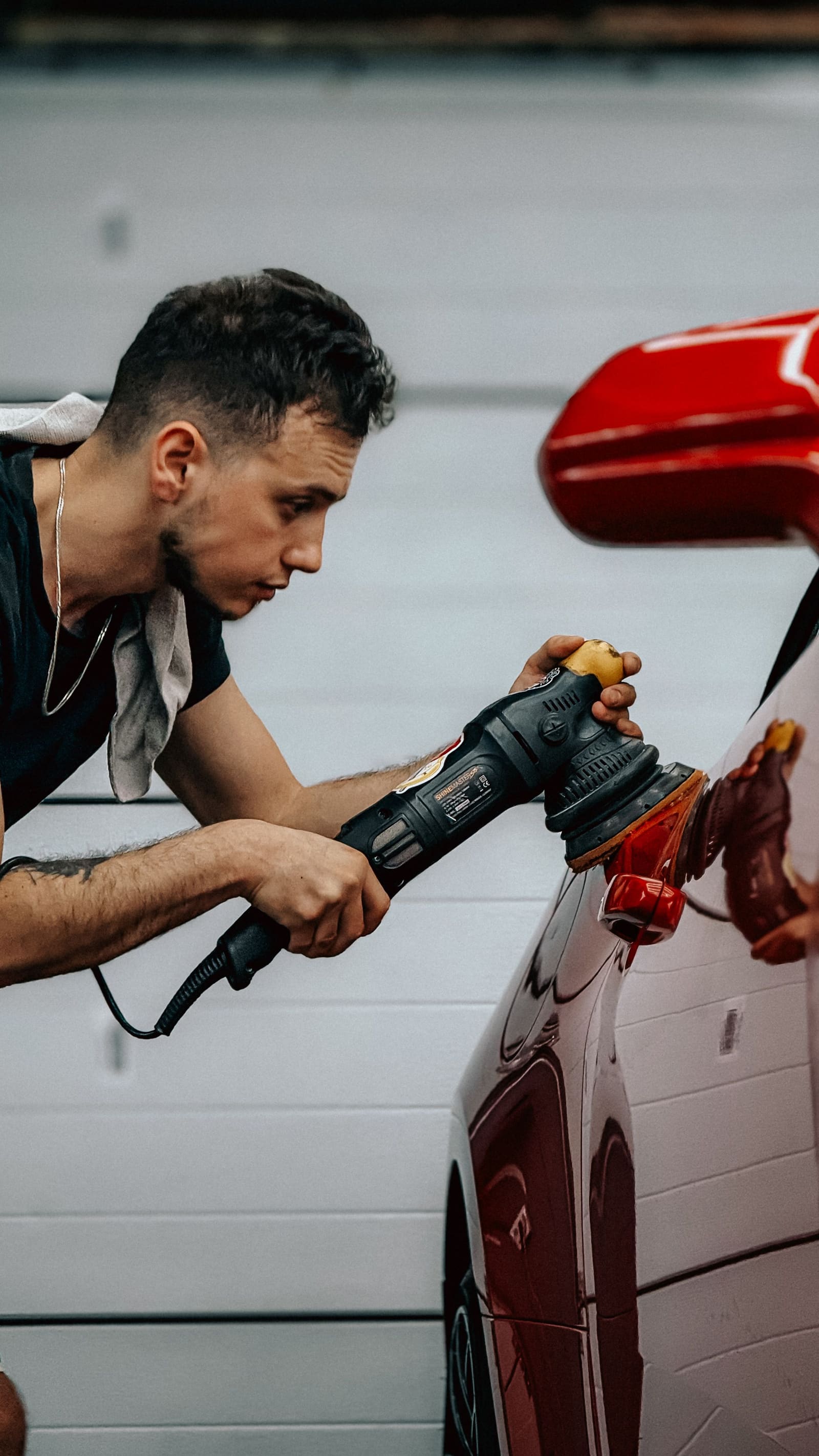
Jump to the calculatorA dual-action polisher is the tool doing the work: passes with cutting and finishing pads take the paint from hazy to deep gloss. Photo: Pexels.
Estimate your paint correction cost
Pick your vehicle and tier. The estimate updates as you go. No email, no quote form.
Estimated paint correction cost
– –
Most pay around – for a two-stage correction.
How this estimate is built
Pro install, parts + labor. Costs reviewed July 2026. Your real quote will vary by shop and vehicle.
Paint correction is machine polishing that removes the swirl marks, light scratches, and haze sitting in your clear coat, the spider-web pattern you see when sunlight hits a black hood. It’s not paint and it’s not a coating. It’s the step that resets a tired finish to deep, reflective gloss, and it’s the prep work that makes a ceramic coating or PPF actually look like the photos.
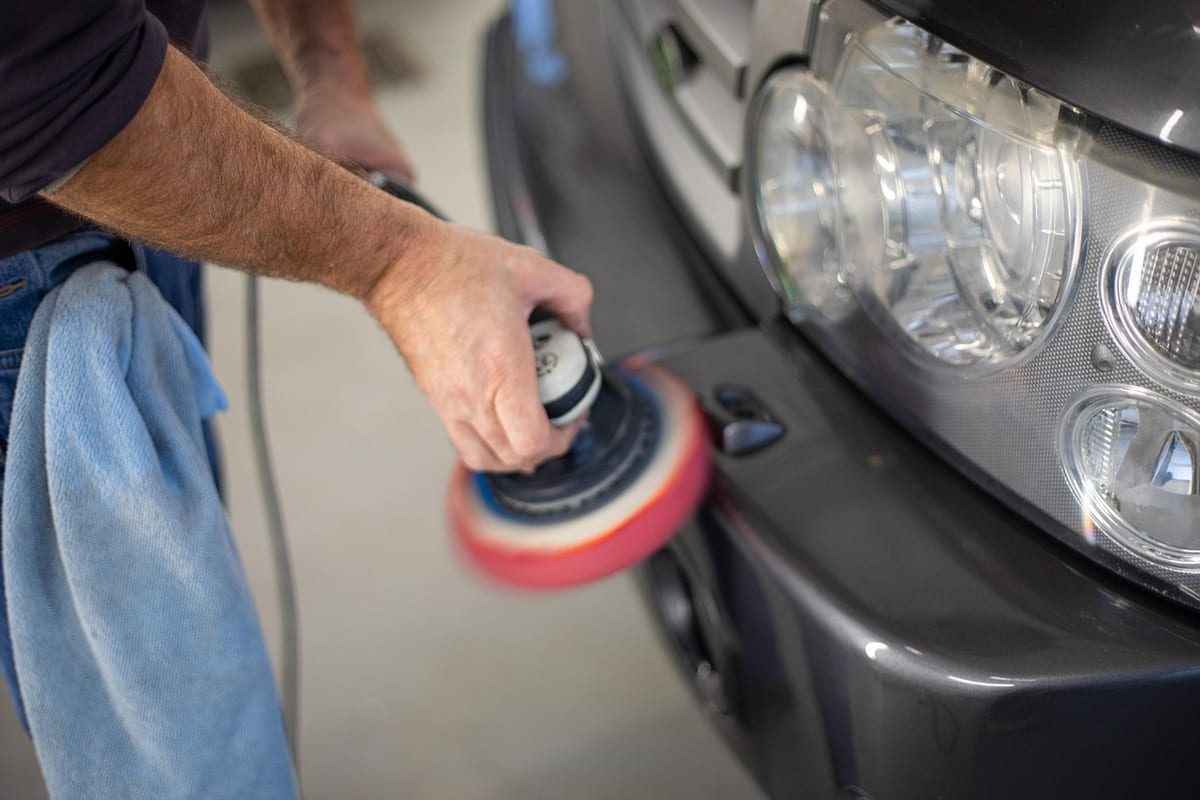
Cost tracks the number of stages. A one-step polish improves gloss and clears light swirls in a few hours, for $300–$600. A two-stage adds a dedicated cutting pass to remove most defects, typically $500–$1,000. A three-stage, multi-pass “show” correction chases a near-flawless finish, runs $900–$1,800 or more, and can take two full days on a dark, soft paint. Each stage is more labor, which is the whole story behind the price.
What each stage actually does to the paint
A one-step is a single pass with a polish, not a compound, think Meguiar’s M205 or Optimum Hyper Polish on a foam polishing pad, and it’s meant to knock back light marring and boost gloss without cutting deep. A real two-stage starts with a heavier compound (M100 Pro Speed Compound and similar) on a more aggressive pad, wool, microfiber, or a dense foam cutting pad, to physically abrade away deeper random scratches and heavy swirl patterns, then follows with a second, gentler polishing pass to remove the fine marring the compound itself leaves behind. A three-stage repeats that logic a third time with a dedicated finishing polish and the softest pad in the lineup, chasing a mirror finish rather than just “swirl-free.” If a shop quotes “two-stage” but only runs one pad and one product for the whole car, that’s a one-step with a bigger invoice, ask what compound and pad combination they’re actually using at each stage.
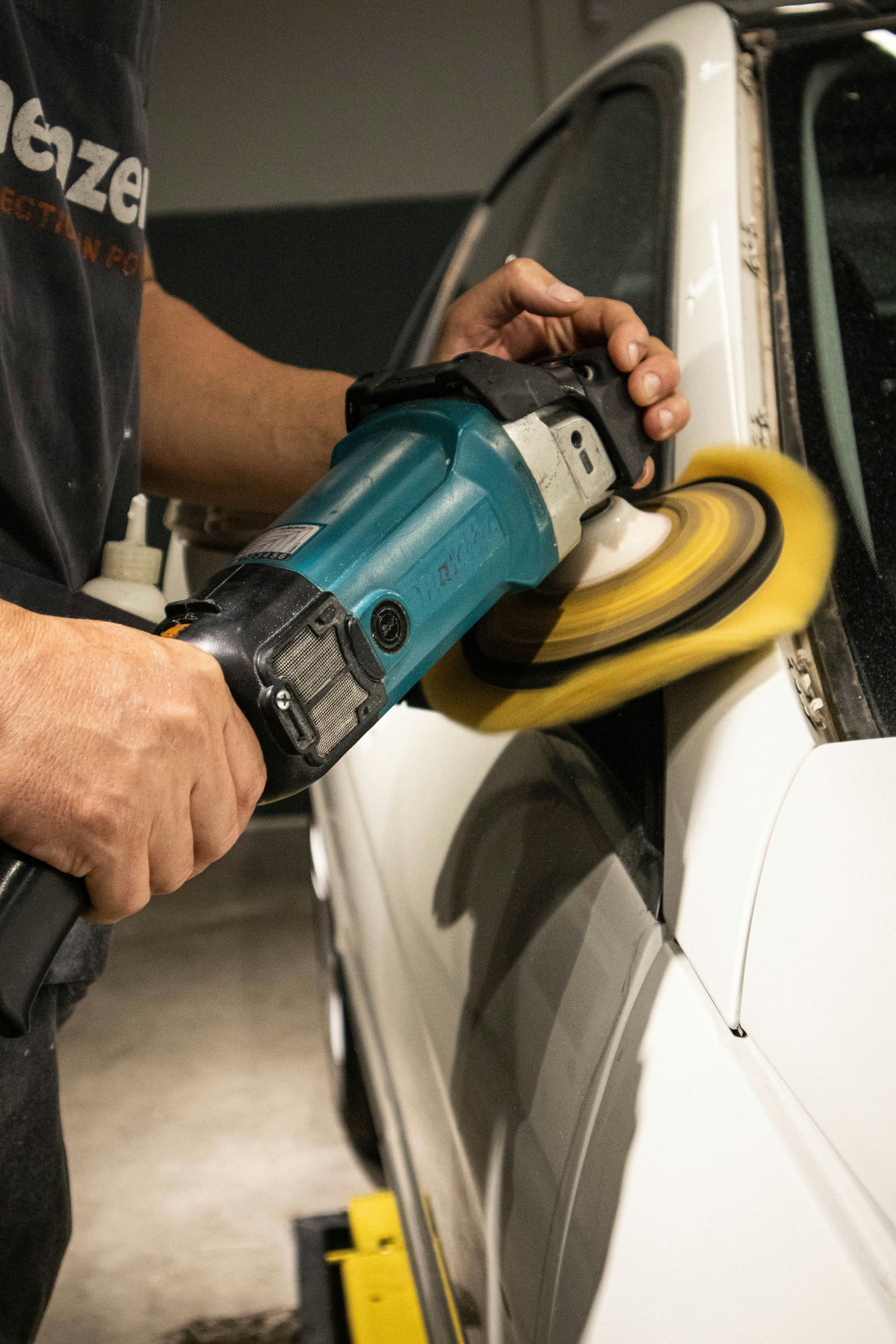
Two details move the number beyond stages: color and what you do afterward. Black and dark single-stage paints show every flaw and take longer to finish, so they cost more than silver or white. And most people coat the car afterward: a coating seals the paint exactly as it is, so any swirls left behind get locked under a hard, glossy layer that’s tough to fix later. A corrected finish with nothing protecting it also slowly picks up new swirls from washing, so the lasting version of this job is correction plus a coating, almost always quoted together.
This is also the most realistic DIY service on the site. A dual-action polisher is forgiving and the tools earn their keep across a few cars. The real risk is going too aggressive and thinning the clear coat, which is a repaint, not a polish, so a paint depth gauge and a test panel are cheap insurance. Run the calculator for your stages and vehicle, then decide whether to buy the kit or book a shop.
The forgiveness of a dual-action tool comes down to how the pad actually moves. A rotary polisher spins in one fixed circle, which cuts fast but concentrates friction and heat in a single spot, exactly the combination that burns through clear coat if the pad lingers too long in one place. A dual-action pad rotates and oscillates at the same time, spreading that same friction over a wider, constantly-shifting path, so heat has nowhere to build up the way it can under a rotary. That’s a meaningful safety margin for a first-timer, not a total guarantee, careless technique with a DA polisher (dwelling too long, too much pressure, skipping the primer coat of polish) can still thin paint. It’s why a rotary stays a pro-only tool on most jobs: it corrects faster in experienced hands and punishes a slow learning curve.
A depth gauge tells you how much clear coat is left before you start, a cutting pad and compound tell you how fast you’re removing it, and going stage by stage with the least aggressive combo first is what keeps those two numbers from meeting in the middle. The numbers themselves are worth knowing: factory clear coat typically runs 40 to 60 microns, sitting on top of a total paint system (primer, base color, clear) that reads somewhere around 90 to 140 microns, roughly 3.5 to 5.5 mils, on a healthy, never-touched panel. A gauge reading under about 85 microns total is thin enough that another aggressive correction is risky; a reading well over 200 microns usually means the panel has already been repainted, sometimes to hide old damage. Every correction pass removes clear coat permanently, typically 1 to 3 microns per pass, so a light one-step might take 2 to 5 microns off the top while a full multi-stage correction can remove 10 to 20 microns in a single visit. That’s not a lot of margin against 40 to 60 microns of total clear coat, which is exactly why paint correction isn’t something you repeat every year, and why a shop that measures before cutting is protecting your car’s resale value, not just being cautious. Once the defects are gone, the surface still needs one more thing before you call the job done.
What moves the price
| What changes the price | Effect on cost |
|---|---|
| Number of stages | A single-step polish is $300–$600; a three-stage show correction is $900–$1,800+. Stages are the main lever. |
| Paint condition | Deep scratches, heavy swirls, and neglected finishes need more cutting and time than light marring. |
| Paint color and hardness | Black and dark single-stage paints show every flaw and take longer to finish than silver or white. |
| Vehicle size | More panels means more hours: trucks and SUVs run 20–40% over a compact sedan. |
| Whether you coat it after | Most people add a ceramic coating so the corrected finish lasts, that's $500–$1,200 on top. |
DIY or hire a pro?
Paint correction is the most DIY-able high-end service if you're patient. A dual-action polisher is forgiving, and the tools pay for themselves on the second car. The risk is real, though: too much pressure or a rotary in the wrong hands burns through clear coat, which is a repaint, not a polish. Start with a test panel and the least aggressive combo that works.
- Time
- A full day to a weekend
- Skill
- Intermediate to advanced, easy to make it worse
- Worth it?
- A real option if you've got patience and a clean space.
What you'll need
- Dual-action (DA) polisher
- Cutting + polishing compound
- Foam cutting and finishing pads
- Paint depth gauge
As an Amazon Associate, Detailing Cost earns from qualifying purchases.
- Done in a controlled shop, not your driveway
- The result you're paying for, with a workmanship warranty
- No wasted product or do-overs if it goes wrong
Get two or three quotes. The cheapest is rarely the one to pick for paint correction.
Is paint correction worth it?
Paint correction is worth it before a ceramic coating or PPF, and on any dark car whose swirls bother you every time the sun hits it. As a standalone with nothing to protect it afterward, the gloss slowly comes back to earth, pair it with a coating or it's a short-lived win.
Worth it if you…
- Are about to ceramic coat and want it done right
- Have a black or dark car full of swirl marks
- Bought used and want to reset the finish
- Notice spider-webbing in direct sunlight
Skip it if you…
- Have light paint where swirls barely show
- Won't protect it afterward and expect it to last
- Have chips or deep scratches that need paint, not polish